Introduction and Welcome

Welcome to All Things Bright and Beautiful. If you are new to this site, I would recommend that you read my very first entry - which is an introduction and welcome to this blog. You can view it here

Thursday, April 25, 2013

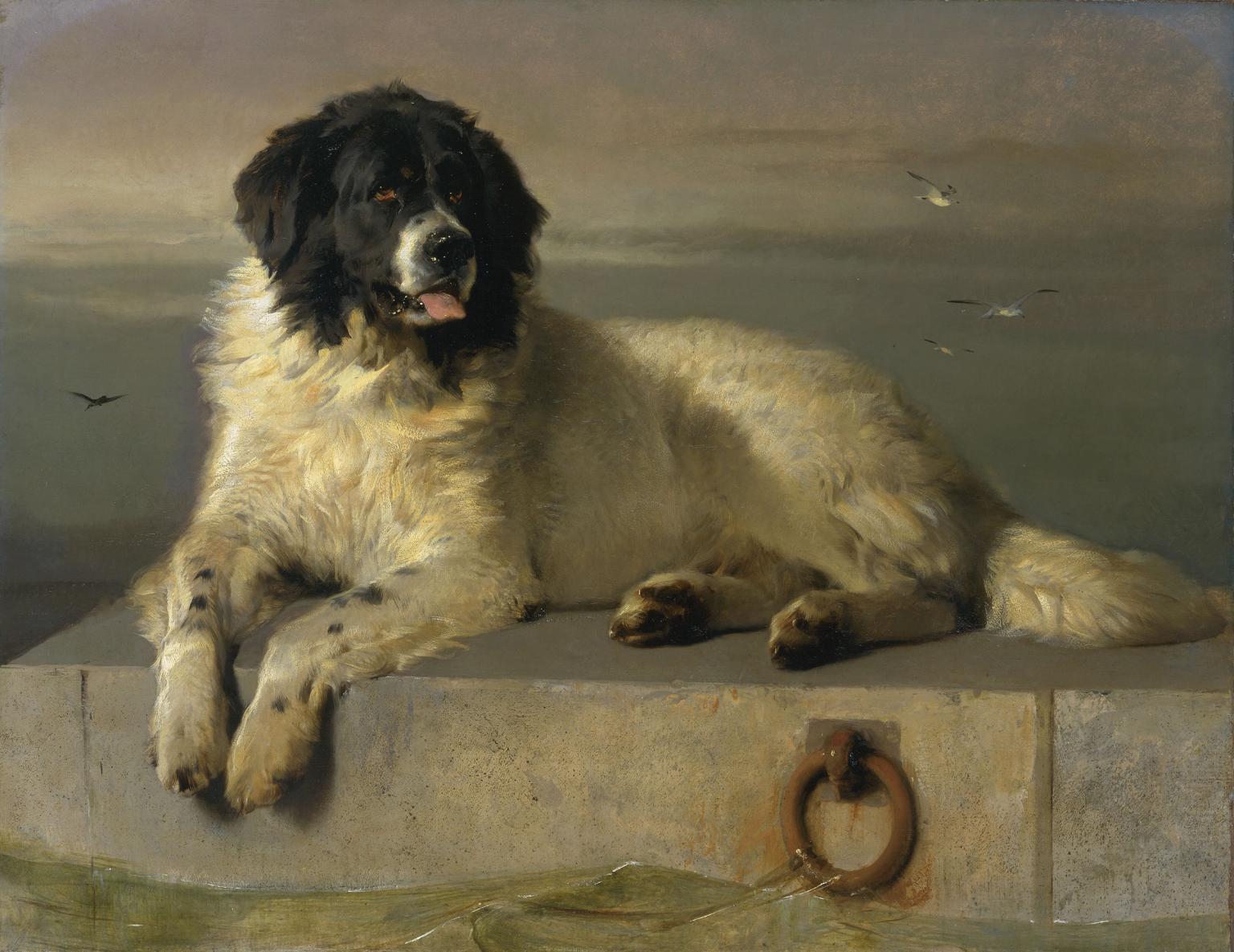
Sir Edwin Henry Landseer - Lion: A Newfoundland Dog, Franz Schubert - Piano Trio No. 2, William Wordsworth - A Sketch

I chose this picture because of the lovely background setting and because the motion of the majestic, bounding dog is captured so well by Sir Edwin Henry Landseer.


http://www.vam.ac.uk/users/sites/default/files/album_images/27846-large.jpg
Lion: a Newfoundland Dog by Sir Edwin Henry Landseer

Franz Schubert - Piano Trio No. 2. This piece of music is quite intense - full of emotional highs and lows, now loud and insistent, then quiet and tender again. 

Today's Poem by William Wordsworth is short but wonderfully descriptive!Can't you just picture the man and value all that has brought him to this quiet, settled spirit. 

A Sketch

The little hedgerow birds,
That peck along the road, regard him not.
He travels on, and in his face, his step,
His gait, is one expression; every limb,
His look and bending figure, all bespeak
A man who does not move with pain, but moves
With thought. -He is insensibly subdued
To settled quiet: he is one by whom
All effort seems forgotten; one to whom
Long patience hath such mild composure given
That patience now doth seem a thing of which
He hath no need. He is by nature led
To peace so perfect, that the young behold
With envy what the Old Man hardly feels.

Thursday, April 18, 2013

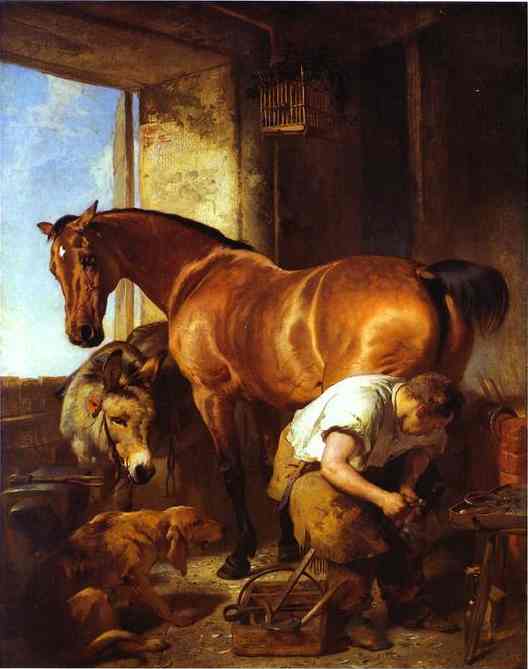
Sir Edwin Henry Landseer - The Shoeing of the Bay Mare, Franz Schubert - Ave Maria

This painting was my introduction to Sir Edwin Henry Landseer.  Lots of details here for study.

Shoeing the Bay Mare - Sir Edwin Henry Landseer

 A lovely piece of music today by Franz Schubert - Ave Maria.

If you want more music by Schubert here is a link to five favorites - Best of Schubert.

I featured this poem in February, but I wanted to feature it again now that Spring is actually coming in Northern Minnesota, or is it?  There seems to be some contention about it, but God has promised that Spring will eventually come, so this poem is in faith that Spring is on its way, even here....

Lines Written in Early Spring

 
by William Wordsworth

I heard a thousand blended notes,
While in a grove I sate reclined,
In that sweet mood when pleasant thoughts
Bring sad thoughts to the mind.

To her fair works did nature link
The human soul that through me ran;
And much it grieved my heart to think
What man has made of man.

Through primrose tufts, in that sweet bower,
The periwinkle trailed its wreaths;                         
And 'tis my faith that every flower
Enjoys the air it breathes.

The birds around me hopped and played:
Their thoughts I cannot measure,
But the least motion which they made,
It seemed a thrill of pleasure.

The budding twigs spread out their fan,
To catch the breezy air;
And I must think, do all I can,
That there was pleasure there.                              

If this belief from heaven be sent,
If such be Nature's holy plan,
Have I not reason to lament
What man has made of man?


Thursday, April 11, 2013

Sir Edwin Henry Landseer - A Distinguished Member or the Humane Society, Franz Schubert - Serenade, William Wordsworth - The Pet Lamb: A Pastoral

Many of Sir Edwin Henry Landseer's paintings include dogs.  I also like his portrayal of the sea, sky and gulls.
A Distinguished Member of the Humane Society - By Sir Edwin Landseer


 A lovely piece of music by Franz Schubert - Serenade
We are enjoying the book by Opal Wheeler, Franz Schubert and His Merry Friends.  It's a chapter book but easy to read.  It also has some of his pieces of music printed in it if you have an instrument and can play.  

I hope you enjoy today's poem by William Wordsworth:

                       The Pet Lamb:  A Pastoral 

THE dew was falling fast, the stars began to blink;
I heard a voice; it said, "Drink, pretty creature, drink!"
And, looking o'er the hedge, before me I espied
A snow-white mountain-lamb with a Maiden at its side.

Nor sheep nor kine were near; the lamb was all alone,
And by a slender cord was tethered to a stone;
With one knee on the grass did the little Maiden kneel,
While to that mountain-lamb she gave its evening meal.

The lamb, while from her hand he thus his supper took,
Seemed to feast with head and ears; and his tail with pleasure
shook.
"Drink, pretty creature, drink," she said in such a tone
That I almost received her heart into my own.

'Twas little Barbara Lewthwaite, a child of beauty rare!
I watched them with delight, they were a lovely pair.
Now with her empty can the Maiden turned away:
But ere ten yards were gone her footsteps did she stay.

Right towards the lamb she looked; and from a shady place
I unobserved could see the workings of her face:
If Nature to her tongue could measured numbers bring,
Thus, thought I, to her lamb that little Maid might sing:

"What ails thee, young One? what? Why pull so at thy cord?
Is it not well with thee? well both for bed and board?
Thy plot of grass is soft, and green as grass can be;
Rest, little young One, rest; what is't that aileth thee?

"What is it thou wouldst seek? What is wanting to thy heart?
Thy limbs are they not strong? And beautiful thou art:
This grass is tender grass; these flowers they have no peers;
And that green corn all day is rustling in thy ears!

"If the sun be shining hot, do but stretch thy woollen chain,
This beech is standing by, its covert thou canst gain;
For rain and mountain-storms! the like thou need'st not fear,
The rain and storm are things that scarcely can come here.

"Rest, little young One, rest; thou hast forgot the day
When my father found thee first in places far away;
Many flocks were on the hills, but thou wert owned by none,
And thy mother from thy side for evermore was gone.

"He took thee in his arms, and in pity brought thee home:
A blessed day for thee! then whither wouldst thou roam?
A faithful nurse thou hast; the dam that did thee yean
Upon the mountain-tops no kinder could have been.

"Thou know'st that twice a day I have brought thee in this can
Fresh water from the brook, as clear as ever ran;
And twice in the day, when the ground is wet with dew,
I bring thee draughts of milk, warm milk it is and new.

"Thy limbs will shortly be twice as stout as they are now,
Then I'll yoke thee to my cart like a pony in the plough;
My playmate thou shalt be; and when the wind is cold
Our hearth shall be thy bed, our house shall be thy fold.

"It will not, will not rest!--Poor creature, can it be
That 'tis thy mother's heart which is working so in thee?
Things that I know not of belike to thee are dear,
And dreams of things which thou canst neither see nor hear.

"Alas, the mountain-tops that look so green and fair!
I've heard of fearful winds and darkness that come there;
The little brooks that seem all pastime and all play,
When they are angry, roar like lions for their prey.

"Here thou need'st not dread the raven in the sky;
Night and day thou art safe,--our cottage is hard by.
Why bleat so after me? Why pull so at thy chain?
Sleep--and at break of day I will come to thee again!"

--As homeward through the lane I went with lazy feet,
This song to myself did I oftentimes repeat;
And it seemed, as I retraced the ballad line by line,
That but half of it was hers, and one half of it was 'mine'.

Again, and once again, did I repeat the song;
"Nay," said I, "more than half to the damsel must belong,
For she looked with such a look and she spake with such a tone,
That I almost received her heart into my own."  


Friday, April 5, 2013

Sir Edwin Henry Landseer - Windsor Castle in Modern Times, Franz Schubert - Quintet in A Major, William Wordsworth - The Two April Mornings

Sir Edwin Landseer was good friends with Queen Victoria and Prince Albert.  The biography I read portrayed him as spending a lot of time with them and he did many paintings for them of their children and animals.  
Windsor Castle in Modern Times - Sir Edwin Henry Landseer
You can read a short biographical sketch of Sir Edwin Henry Landseer's life here.

Franz SchubertQuintet in A Major
This piece is a little longer than some - almost a half hour but it's fun to watch the musicians play.  If your children tire of watching  you can give them something to do with their hands will they listen. 

This poem  by William Wordsworth is a bit sad but so beautifully written
  
THE TWO APRIL MORNINGS

WE walked along, while bright and red
Uprose the morning sun;
And Matthew stopped, he looked, and said,
"The will of God be done!"

A village schoolmaster was he,
With hair of glittering grey;
As blithe a man as yon could see
On a spring holiday.

And on that morning, through the grass,
And by the steaming rills,
We travelled merrily, to pass
A day among the hills.

"Our work," said I, "was well begun,
Then, from thy breast what thought,
Beneath so beautiful a sun,
So sad a sigh has brought?"

A second time did Matthew stop;
And fixing still his eye
Upon the eastern mountain-top,
To me he made reply:

"Yon cloud with that long purple cleft
Brings fresh into my mind
A day like this which I have left
Full thirty years behind.

"And just above yon slope of corn
Such colours, and no other,
Were in the sky, that April morn,
Of this the very brother.

"With rod and line I sued the sport
Which that sweet season gave,
And, to the church-yard come, stopped short
Beside my daughter's grave.

"Nine summers had she scarcely seen,
The pride of all the vale;
And then she sang;--she would have been
A very nightingale.

"Six feet in earth my Emma lay;
And yet I loved her more,
For so it seemed, than till that day
I e'er had loved before.

"And, turning from her grave, I met,
Beside the church-yard yew,
A blooming Girl, whose hair was wet
With points of morning dew.

"A basket on her head she bare;
Her brow was smooth and white:
To see a child so very fair,
It was a pure delight!

"No fountain from its rocky cave
E'er tripped with foot so free;
She seemed as happy as a wave
That dances on the sea.

"There came from me a sigh of pain
Which I could ill confine;
I looked at her, and looked again:
And did not wish her mine!"

Matthew is in his grave, yet now,
Methinks, I see him stand,
As at that moment, with a bough
Of wilding in his hand.  


Friday, March 29, 2013

Sir Edwin Landseer- Isaac Van Amburgh and His Animals, Frahz Schubert - Impromptu in G Flat Majore, William Wordsworth -

Sir Edwin Henry Landseer loved painting animals and this painting is full of a variety of them!  Isaac Van Amburgh was an animal trainer.  You can read wikipedia's entry about van Amburgh here.
Isaac Van Amburgh and His Animals painted by Sir Edwin Henry Landseer

 .
A lovely piece of music by Franz Schubert today, Impromptu in G flat Major    It is played by Vladimir Horowitz, one of the greatest pianists of the twentieth century.  You can read about him here.

here is a link to the "Best of Schubert" on Youtube.


Another lovely poem by William Wordsworth.  It makes me want to drop everything and spend a day outside.


          IT is the first mild day of March:
          Each minute sweeter than before
          The redbreast sings from the tall larch
          That stands beside our door.

          There is a blessing in the air,
          Which seems a sense of joy to yield
          To the bare trees, and mountains bare,
          And grass in the green field.

          My sister! ('tis a wish of mine)
          Now that our morning meal is done,                          10
          Make haste, your morning task resign;
          Come forth and feel the sun.

          Edward will come with you;--and, pray,
          Put on with speed your woodland dress;
          And bring no book: for this one day
          We'll give to idleness.

          No joyless forms shall regulate
          Our living calendar:
          We from to-day, my Friend, will date
          The opening of the year.                                    20

          Love, now a universal birth,
          From heart to heart is stealing,
          From earth to man, from man to earth:
          --It is the hour of feeling.

          One moment now may give us more
          Than years of toiling reason:
          Our minds shall drink at every pore
          The spirit of the season.

          Some silent laws our hearts will make,
          Which they shall long obey:                                 30
          We for the year to come may take
          Our temper from to-day.

          And from the blessed power that rolls
          About, below, above,
          We'll frame the measure of our souls:
          They shall be tuned to love.

          Then come, my Sister! come, I pray,
          With speed put on your woodland dress;
          And bring no book: for this one day
          We'll give to idleness. 

Wednesday, March 20, 2013

Sir Edwin Henry Landseer - The Stag, Franz Schubert - Symphony No. 5 in B Flat Major, William Wordsworth - My Heart Leaps Up

Sir Edwin Henry Landseer is an artist that I've admired since I saw a work of his in an old Childcraft Art & Music children's art appreciation book.  It is very hard to find biographies written about him though there are a few old copies.  He enjoyed painting animals.  This weeks painting is of a regal stag.
Scene in Braemar- Highland Deer

Our new musician is Franz Schubert.  You can read a wikipedia biographical sketch of his life and music here.

Our first featured piece of music by Schubert is Symphony No. 5 in B Flat Major.  I hope you enjoy this lovely piece of music.

A children's biography to consider is Franz Schubert - Franz Schubert and his merry friends by Opal Wheeler.

I'm still fascinated by William Wordsworth and we haven't had time yet to read a biography of his life so we plan to continue for another season with Wordsworth and his wonderful poetry.  If you're tired of his poetry you may want to look back in the archives for another poet.  

      My Heart Leaps Up

My heart leaps up when I behold
  A rainbow in the sky:
So was it when my life began;
So is it now I am a man;
So be it when I shall grow old,
  Or let me die!
The Child is father of the Man;
And I could wish my days to be 
Bound each to each by natural piety.

Thursday, March 14, 2013

Mary Cassatt - Mother Combing Her Child's Hair, Frederic Chopin: Raindrop Prelude, Op. 28, No. 15, William Wordsworth - The Kitten and the Falling Leaves

I like this painting by Mary Cassatt of a mother combing her little girl's hair.  They both look gentle and sweet.  The use of a mirror to the left adds an interesting added perspective of them.  
The impressionistic style is very obvious in the clothing and chair with all the little strokes of color.  This painting is made with pastel and gouche on tan paper.  Pastel is chalks and gouche is opaque pigments ground in water and thickened with a gluelike substance.
Mary Cassatt - Mother Combing Her Child's Hair
I have really come to appreciate Mary Cassatt as we have studied her work and read a short biography of her life.  I like how she chose common, comfortable scenes for her paintings.  I didn't realize how impressive this was until I read that this was unusual in her time when most paintings of people were formal and it was a new thing to use bright colors and informal settings.  Next week we will begin studying paintings by Sir Edwin Landseer.
 
A final piece by Frederic Chopin today is very contemplative.  Frederic Chopin - "Raindrop" Prelude, Op. 28, No. 15.  The following is the text provided by the person who uploaded this piece to You-tube:  

Beginning in D-Flat Major, this piece focuses on inner confliction and the contemplation of the solitary self. The composition was born from the mind of Frédéric Chopin in 1858 during his stay at the Valldemossa monastery. Amantine Dupin once commented, "It casts the soul into a terrible dejection. Maurice and I had left [Chopin] in good health one morning to go shopping in Palma for things we needed at our "encampment." The rain came in overflowing torrents. We made three leagues in six hours, only to return in the middle of a flood. We got back in absolute dark, shoeless, having been abandoned by our driver to cross unheard of perils. We hurried, knowing how our sick one would worry. Indeed he had, but now was as though congealed in a kind of quiet desperation, and, weeping, he was playing his wonderful prelude. Seeing us come in, he got up with a cry, then said with a bewildered air and a strange tone, "Ah, I was sure that you were dead." When he recovered his spirits and saw the state we were in, he was ill, picturing the dangers we had been through, but he confessed to me that while waiting for us he had seen it all in a dream, and no longer distinguishing the dream from reality, he became calm and drowsy. While playing the piano, persuaded that he was dead himself, he saw himself drown in a lake. Heavy drops of icy water fell in a regular rhythm on his breast, and when I made him listen to the sound of the drops of water indeed falling in rhythm on the roof, he denied having heard it. He was even angry that I should interpret this in terms of imitative sounds. He protested with all his might—and he was right to—against the childishness of such aural imitations. His genius was filled with the mysterious sounds of nature, but transformed into sublime equivalents in musical thought, and not through slavish imitation of the actual external sounds. His composition of that night was surely filled with raindrops, resounding clearly on the tiles of the Charterhouse, but it had been transformed in his imagination and in his song into tears falling upon his heart from the sky."

Another thoughtful poem by William Wordsworth - He uses a simple pattern of rhyming every two or occasionally three lines.  

The Kitten and the Falling Leaves

That way look, my Infant, lo!
What a pretty baby-show!
See the Kitten on the wall,
Sporting with the leaves that fall,

Withered leaves -- one -- two -- and three --
From the lofty elder-tree!
Through the calm and frosty air
Of this morning bright and fair,

Eddying round and round they sink
Softly, slowly: one might think,
From the motions that are made,
Every little leaf conveyed

Sylph or Faery hither tending, --
To this lower world descending,
Each invisible and mute,
In his wavering parachute.

-- But the Kitten, how she starts,
Crouches, stretches, paws, and darts!
First at one, and then its fellow
Just as light and just as yellow;

There are many now -- now one --
Now they stop and there are none.
What intenseness of desire
In her upward eye of fire!

With a tiger-leap half-way
Now she meets the coming prey,
Lets it go as fast, and then
Has it in her power again:

Now she works with three or four,
Like an Indian conjurer;
Quick as he in feats of art,
Far beyond in joy of heart.

Were her antics played in the eye
Of a thousand standers-by,
Clapping hands with shout and stare,
What would little Tabby care

For the plaudits of the crowd?
Over happy to be proud,
Over wealthy in the treasure
Of her own exceeding pleasure!

'Tis a pretty baby-treat;
Nor, I deem, for me unmeet;
Here, for neither Babe nor me,
Other play-mate can I see.

Of the countless living things,
That with stir of feet and wings
(In the sun or under shade,
Upon bough or grassy blade)

And with busy revellings,
Chirp and song, and murmurings,
Made this orchard's narrow space,
And this vale so blithe a place;

Multitudes are swept away
Never more to breathe the day:
Some are sleeping; some in bands
Travelled into distant lands;

Others slunk to moor and wood,
Far from human neighbourhood;
And, among the Kinds that keep
With us closer fellowship,

With us openly abide,
All have laid their mirth aside.
Where is he that giddy Sprite,
Blue-cap, with his colours bright,

Who was blest as bird could be,
Feeding in the apple-tree;
Made such wanton spoil and rout,
Turning blossoms inside out;

Hung-head pointing towards the ground --
Fluttered, perched, into a round
Bound himself, and then unbound;
Lithest, gaudiest Harlequin!
Prettiest Tumbler ever seen!

Light of heart and light of limb;
What is now become of Him?
Lambs, that through the mountains went
Frisking, bleating merriment,

When the year was in its prime,
They are sobered by this time.
If you look to vale or hill,
If you listen, all is still,

Save a little neighbouring rill,
That from out the rocky ground
Strikes a solitary sound.
Vainly glitter hill and plain,
And the air is calm in vain;

Vainly Morning spreads the lure
Of a sky serene and pure;
Creature none can she decoy
Into open sign of joy:

Is it that they have a fear
Of the dreary season near?
Or that other pleasures be
Sweeter even than gaiety?

Yet, whate'er enjoyments dwell
In the impenetrable cell
Of the silent heart which Nature
Furnishes to every creature;

Whatsoe'er we feel and know
Too sedate for outward show, 0
Such a light of gladness breaks,
Pretty Kitten! from thy freaks, --

Spreads with such a living grace
O'er my little Dora's face;
Yes, the sight so stirs and charms
Thee, Baby, laughing in my arms,

That almost I could repine
That your transports are not mine,
That I do not wholly fare
Even as ye do, thoughtless pair!

And I will have my careless season
Spite of melancholy reason,
Will walk through life in such a way
That, when time brings on decay,

Now and then I may possess
Hours of perfect gladsomeness.
-- Pleased by any random toy;
By a kitten's busy joy,

Or an infant's laughing eye
Sharing in the ecstasy;
I would fare like that or this,
Find my wisdom in my bliss;

Keep the sprightly soul awake,
And have faculties to take,
Even from things by sorrow wrought,
Matter for a jocund thought,

Spite of care, and spite of grief,
To gambol with Life's falling Leaf.